
Horse Racing App Features: Mobile BOG, Streaming and Cash Out
 Available in US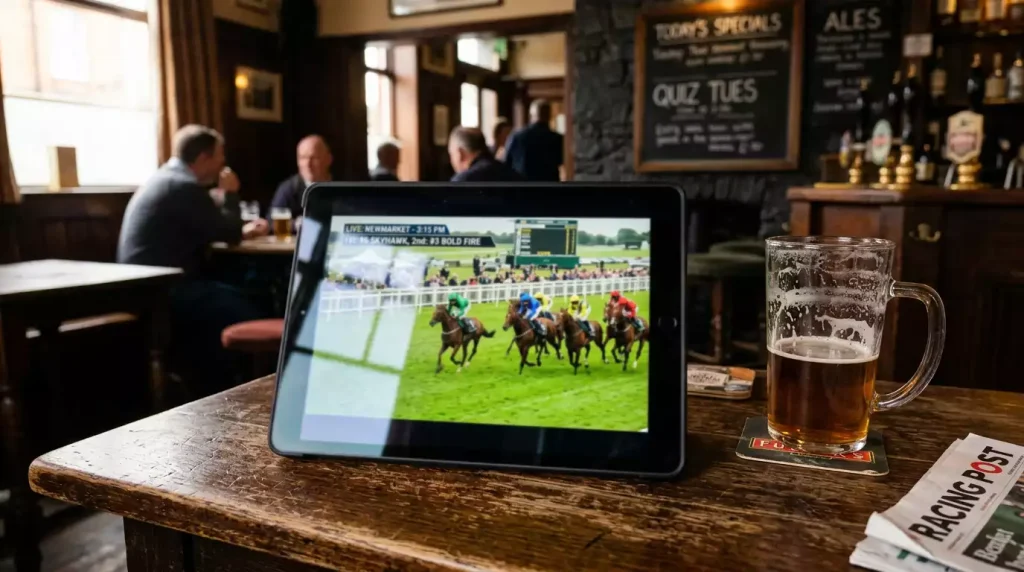
Comparing Mobile App Features: BOG and Cash Out Value
The betting app you choose shapes every wager you place. Not because of the logo on the loading screen, but because of what happens after you tap it. Best Odds Guaranteed can add hundreds of pounds to your annual returns if you back early prices regularly. Live streaming lets you watch races without juggling television schedules or separate apps. Cash out transforms how you manage risk mid-race. These features determine whether mobile betting enhances your racing experience or merely replicates a betting shop in your pocket.
Real event online betting in the UK generated gross gaming yield of £2.3 billion in 2026, growing 15% year-on-year according to Houlihan Lokey’s European gaming analysis. That growth reflects punters voting with their wallets, migrating to platforms that offer genuine utility rather than just access to markets. The apps capturing this growth aren’t necessarily the household names; they’re the ones executing features well.
Andrew Rhodes, Chief Executive of the UK Gambling Commission, observed in his 2026 BGC AGM speech: “Online betting, particularly, follows the pattern of large marquee events. For example, racing saw an uptick in participation recently, and GGY has tracked along with results.” That pattern means the features that matter most are those that enhance big-race days: reliable streaming when demand peaks, BOG that actually pays out, and cash-out that doesn’t freeze when you need it.
This guide breaks down the core features of horse racing betting apps, explaining how each works, when it adds value, and which operators execute it best. Know what to look for before you download.
Best Odds Guaranteed Explained
Best Odds Guaranteed is the single most valuable feature for punters who back horses at early prices. The concept is simple: if you take a price in the morning and the starting price (SP) is higher when the race begins, you get paid at the better odds. If the SP is lower, you keep your original price. You cannot lose.
The mechanics matter. When you place a bet at, say, 8/1 on a horse in the morning, that price is locked in on your bet slip. The market then moves throughout the day based on money coming in, stable confidence, track conditions, and dozens of other factors. By post time, your selection might have drifted to 10/1 or been backed in to 5/1. With BOG, a drift to 10/1 means you get paid at 10/1 even though your slip shows 8/1. The bookmaker absorbs the difference.
Timing varies between operators. bet365 typically offers early prices from 8am on UK race days, with BOG applying from that point. For ITV-televised races, bet365 extends price matching from 10am, covering races where morning money is most likely to move the market. Most competitors begin pricing around 9am, with BOG starting simultaneously. The one-hour advantage bet365 offers creates genuine value for punters who form strong opinions overnight and want to lock in prices before the market reacts to morning news.
Conditions apply, and understanding them prevents disappointment. Most bookmakers exclude BOG from ante-post markets, where prices are set weeks or months before the race. Some exclude specific promotions or enhanced odds from BOG coverage, meaning your boosted price won’t be further enhanced if the SP drifts. Ladbrokes applies a daily limit of £2,500 on BOG payouts, which only affects high-stakes punters but is worth knowing if you regularly place four-figure bets.
BOG doesn’t apply to exchanges like Betfair, where you’re betting against other punters rather than against the bookmaker. This is a genuine trade-off: exchanges often offer better base odds, but you sacrifice the safety net of BOG protection. For volatile markets where prices swing significantly, traditional bookmakers with strong BOG terms may deliver better value despite lower initial prices.
The practical impact compounds over time. A punter placing twenty bets per week at early prices might see BOG triggered on three or four of them, depending on market conditions. If those triggers add an average of two points to the returned price, the cumulative benefit across a racing season becomes substantial. This isn’t speculation; it’s arithmetic that favours patient punters who take early value consistently.
Not all BOG implementations are equal. Some operators process payouts automatically within minutes of the result, displaying the enhanced price on your settled bet slip. Others require manual calculation or even customer service intervention to claim the difference. The apps that handle BOG seamlessly, without requiring you to notice and claim the enhancement, are genuinely preferable for anyone betting regularly.
Live Streaming Quality and Coverage
Watching a race you’ve backed transforms the betting experience. The final furlong of a tight finish, when your selection is battling for position, delivers an intensity that checking results afterwards cannot replicate. Live streaming built into betting apps means carrying that experience in your pocket, available wherever mobile signal allows.
Coverage in UK betting apps comes primarily from two sources. Racing TV holds rights to 61 racecourses across the UK and Ireland, providing the backbone of most bookmakers’ streaming offerings. This coverage includes all major tracks: Ascot, Cheltenham, Newmarket, York, Aintree, and the rest of the calendar’s highlights. ITV Racing broadcasts selected meetings, typically Saturdays and major festivals, and these feeds are usually available through betting apps with appropriate agreements. The BHA Racing Report 2026 showed that attendances reached 5.031 million in 2026, the first time they exceeded 5 million since 2019, demonstrating sustained interest in the sport that mobile streaming helps serve.
At The Races covers 25 UK racecourses plus extensive international racing, appearing in some apps as supplementary coverage. The combination of these sources means most UK and Irish fixtures are available to stream, though coverage gaps occasionally appear at smaller all-weather meetings or when rights negotiations complicate access.
Quality depends on your connection and the operator’s infrastructure. The best apps deliver streams that load within two to three seconds and maintain stable playback through a race. The worst suffer buffering during peak Saturday afternoons when thousands of punters hit the same servers simultaneously. We’ve tested major apps during Cheltenham and found significant variation: bet365 and the Entain apps (Coral, Ladbrokes) handled load well, while smaller operators occasionally stuttered.
Latency matters more than casual viewers might expect. A stream running five seconds behind the live action means your cash-out decisions are based on outdated information. Photo finishes resolve before your screen shows them. The difference between a two-second delay and a five-second delay is the difference between watching a race and watching a slightly delayed recording of a race. The best apps minimise this gap; others treat streaming as a checkbox feature rather than a core function.
Access requirements vary between operators. Most require a funded account, meaning you need money deposited even if you don’t plan to bet on a particular race. Some add further conditions: a bet placed within the previous 24 hours, a qualifying bet on the race you want to watch, or a minimum account balance. bet365’s approach is among the more permissive, requiring only a funded account or recent betting activity. Paddy Power requires a positive balance. Reading the specific terms before assuming you can watch is worthwhile.
Bandwidth consumption on mobile data is a practical consideration for punters watching multiple races away from WiFi. A typical racing stream consumes roughly 500MB per hour at standard quality, more at higher resolutions. Streaming a full Saturday card from 1pm to 5pm could use 2GB or more, which matters if your mobile plan has caps. The apps that offer quality adjustment options provide useful flexibility here.
International racing is increasingly available, with some apps streaming French, American, and Australian fixtures. The quality and reliability of these streams varies more than UK coverage, but for punters interested in global racing, the availability adds genuine value. Night-time UK hours become betting opportunities when Australian racing fills the gap.
Cash Out: Full, Partial and Auto
Knowing exactly when to secure your profits is crucial, which is why learning how to cash out horse racing bets can save your bankroll during tight finishes. Cash out lets you settle a bet before the race finishes, locking in profit or cutting losses based on how the market has moved since you placed your wager. The feature has transformed how punters manage risk, though it also creates new ways to make expensive mistakes.
The basic mechanics work like this: you back a horse at 10/1 with a £10 stake, giving a potential return of £110. As the race approaches, money comes for your selection and the price shortens to 5/1. The bookmaker offers you cash out at, say, £45, reflecting the improved probability of your horse winning minus a margin for the operator. You can take the guaranteed £45 profit or let the bet run for the full £110 if your horse wins. If your horse loses, you lose your original £10 stake.
Full cash out settles the entire bet at the offered price. Partial cash out, available at most major operators, lets you settle a portion while leaving the rest running. Using the example above, you might cash out £30 of value while leaving exposure equivalent to £20 potential profit still riding on the race. This hybrid approach captures some profit while maintaining upside, though the mathematics can become confusing for complex multiples.
Auto cash out is a newer feature that not all operators offer. You set a target profit level, and the app automatically settles if the cash-out value reaches that threshold. For punters who can’t watch every race they bet on, this removes the anxiety of missing a cash-out window while your horse was travelling well before fading in the final furlong.
The UK Gambling Commission’s latest market data shows total online GGY increased by 7% in Q4 2026-25, driven partly by features like cash out that increase engagement during live events. The data suggests punters value real-time decision-making options, and operators have responded by making cash out increasingly prominent in their apps.
When to use cash out is a strategic question without a single right answer. Taking guaranteed profit makes sense when your edge has been realised by market movement and you’d rather lock in gains than risk reversal. It makes less sense when the cash-out offer significantly undervalues your position, which happens when operators widen margins during volatile in-running markets. The apps display cash-out offers as if they’re helping you; remember they’re also ensuring profitability for the operator.
Cash out during a race, as opposed to pre-race, adds complexity. The offers update rapidly as positions change, and the latency issues mentioned in streaming become directly financial. If your horse takes the lead with two furlongs to run, the cash-out offer spikes. By the time you tap the button and the server processes your request, the position might have changed. Most apps show a confirmation screen with the current offer, but rapid market movement can still create frustration when the confirmed price differs from what you expected.
Accumulators and multiples complicate cash-out calculations further. A five-fold with three legs won offers cash out reflecting the reduced uncertainty, but the calculations involved make intuitive assessment difficult. Some punters prefer settling legs individually where possible rather than cashing out the entire multiple, though this isn’t available on all platforms or market combinations.
The discipline cash out requires is underestimated. Having an exit button available throughout every race creates temptation to micromanage positions, often resulting in worse outcomes than simply letting bets run. The punters who use cash out most effectively tend to have clear rules about when they’ll consider it rather than making emotional decisions based on fluctuating offers.
Free Bets and Welcome Bonuses
Every betting app advertises free bets prominently, making them seem like straightforward gifts. The reality involves conditions, wagering requirements, and restrictions that significantly affect actual value. Understanding these mechanics prevents disappointment and helps identify genuinely valuable offers from marketing exercises.
Welcome bonuses typically follow a bet-and-get structure: deposit a minimum amount, place a qualifying bet at minimum odds, and receive free bet credits if that bet loses (or sometimes regardless of outcome). A common format offers £30 in free bets after placing a £10 qualifying bet at odds of 1.5 or greater. The qualifying bet must lose for the free bet to activate in most cases, meaning you’ve traded £10 for £30 in restricted credits.
Free bet credits differ from cash in important ways. Most operators return only the winnings from a free bet, not the stake. A £10 free bet at 5/1 returns £50 in winnings, not £60. This stake-not-returned model reduces the effective value of free bets by roughly 15-20% compared to cash equivalents at typical racing odds. Some operators offer stake-returned free bets, which are genuinely more valuable and worth seeking out.
Wagering requirements on casino bonuses are well understood, but racing free bets carry their own restrictions. Minimum odds requirements prevent you from using free bets on short-priced favourites to guarantee small returns. Market restrictions might exclude certain bet types like forecasts or Tote pools. Expiry periods, typically seven days, create pressure to use credits quickly rather than waiting for optimal opportunities. Each restriction chips away at theoretical value.
Ongoing promotions for existing customers often provide better long-term value than welcome offers. Regular price boosts, money-back specials on featured races, and free bet clubs for consistent activity compound over time. An app that offers £50 in welcome free bets but minimal ongoing promotions is less valuable across a racing season than one offering £20 welcome credits with regular weekly offers.
Racing-specific promotions deserve attention because they’re designed for the sport’s particular characteristics. Extra places on handicaps, Best Odds Guaranteed enhancements, and ante-post insurance address genuine punting scenarios rather than generic gambling behaviour. Paddy Power’s Money Back specials, where stakes are refunded as free bets if your horse finishes second or third in featured races, provide regular opportunities that accumulate into significant value for regular racing bettors.
The promotional calendar matters. Major festivals attract competitive offers as operators fight for new customers and increased engagement. Cheltenham, Aintree, Royal Ascot, and the major flat racing festivals see enhanced welcome offers, increased free bet values, and more generous existing customer promotions. Timing account creation around these periods can significantly improve the value extracted from welcome bonuses.
Comparing promotional offerings requires honest assessment of your betting patterns. A punter who places one bet per week extracts less value from a bet club requiring five bets weekly than someone who naturally bets that frequently. The best promotional fit depends on how you actually bet, not how the operator imagines an ideal customer behaves.
Extra Places Offers
Extra places promotions extend each-way terms beyond standard payouts, offering additional placed positions on selected races. The feature appears frequently on major handicaps and festival races, providing genuine value for punters who regularly bet each-way.
Standard each-way terms on most races pay the place portion at a fraction of the win odds, with the number of places determined by field size. A typical handicap with sixteen or more runners pays four places at one-quarter odds. Extra places promotions add a fifth, sixth, or even seventh place, meaning your each-way bet pays out on positions that would normally lose.
The mathematics favour the punter when extra places are offered. Consider a twenty-runner handicap where you’ve backed a horse each-way at 20/1. Standard terms pay four places at 5/1 for the place portion. With an extra places offer paying five places, your horse can finish fifth and still return 5/1 on the place stake. Without the promotion, fifth place loses the entire bet.
Operators typically restrict extra places to featured races with large fields, which is where the promotion provides most value anyway. The Grand National, big Cheltenham handicaps, and valuable Saturday races at major tracks frequently carry extra places offers. Smaller fields rarely qualify because the standard place terms already cover a reasonable proportion of runners.
Comparison between operators before placing each-way bets on promoted races is worthwhile. One bookmaker might offer five places while another offers six on the same race. The base odds might differ slightly, but the extra place often outweighs a small odds disadvantage. Apps that make extra places offers prominent and easy to find save time during busy race days when you’re placing multiple bets.
Extra places apply only to each-way bets, not win-only selections. This seems obvious but catches some punters who assume the promotion enhances all bets on the race. The place portion of your each-way bet benefits; the win portion pays only if your horse actually wins, as normal.
Combining extra places with Best Odds Guaranteed can create particularly valuable situations. You take an early price on a horse in a big handicap, the price drifts, BOG pays you at the enhanced starting price, and extra places means fifth or sixth place still returns a profit. These combined features represent mobile betting at its most useful, delivering value that wasn’t available to shop punters a decade ago.
Race Cards and Form Guides
Race card quality separates betting apps designed for racing from generic sportsbooks with racing bolted on. The information displayed about each horse, and how it’s presented, determines whether you can make informed decisions within the app or need to consult external sources before betting.
Basic race card data includes the horse’s name, jockey, trainer, weight carried, draw position, and recent form figures. This minimum appears across all mainstream betting apps. The form figures typically show the horse’s finishing positions in its last six races, reading left to right from oldest to most recent. A form line of 312145 tells you the horse won last time out, finished fourth before that, and has been consistently competitive.
Deeper form information elevates certain apps above competitors. Going preference indicators show how each horse performs on different ground conditions, which matters enormously when racing switches from good to soft after overnight rain. Distance analysis reveals whether a horse is stepping up or down in trip and how it’s performed at similar distances previously. Age and experience context helps assess whether a lightly raced horse might improve or whether a veteran is in decline.
Trainer and jockey statistics within race cards provide quick assessment of connections’ current form. A trainer sending out 30% winners in the past fourteen days suggests confidence in declarations. A jockey riding at 15% strike rate at the course historically indicates course familiarity. These percentages won’t make selections for you, but they provide context that supports decision-making.
Integration with specialist form services varies significantly between operators. Some apps incorporate Timeform ratings, which condense complex form analysis into numerical assessments. Others partner with Racing Post for form guides and expert analysis. The best apps don’t just display this data; they integrate it into the betting flow so you can study form and place bets without switching between apps or browser tabs.
Speed figures and sectional times remain underutilised in most mainstream betting apps. These metrics, which analyse how fast horses run different sections of a race, provide insight that traditional form figures miss. A horse that finished third but ran the fastest final two furlongs might represent better value than the winner who was always prominent. Sporting Life and specialist services provide this data, but few betting apps integrate it effectively.
Market movement indicators show how betting patterns are affecting prices in real time. A horse drifting from 4/1 to 8/1 in the morning suggests money coming for other runners or negative news affecting confidence. A horse shortening from 10/1 to 6/1 indicates support. These price movements often reflect information not visible in form data, and apps that display them prominently help punters make more informed timing decisions.
Visual presentation matters when you’re quickly scanning race cards between meetings. Clean typography, logical information hierarchy, and sensible use of colour coding make form study more efficient. Cluttered race cards that cram every possible data point into small screens become unusable on mobile devices, defeating the purpose of having information available while away from a desktop.
Feature Availability by App
Racing features distribute unevenly across betting apps, with each operator emphasising different strengths. The table below summarises availability of core features, though implementation quality varies beyond simple yes/no answers.
| Feature | bet365 | Paddy Power | William Hill | Coral | Ladbrokes | Betfred | Sky Bet |
|---|---|---|---|---|---|---|---|
| BOG (UK/IRE) | Yes | Yes | Yes | Yes | Yes* | Yes | Yes |
| Live Streaming | Excellent | Good | Good | Very Good | Very Good | Adequate | Good |
| Cash Out Types | Full/Partial/Auto | Full/Partial | Full/Partial | Full/Partial | Full/Partial | Full/Partial | Full/Partial |
| Extra Places | Regular | Frequent | Regular | Frequent | Frequent | Regular | Occasional |
| Form Data Depth | Excellent | Good | Good | Very Good | Very Good | Basic | Good |
| Timeform Integration | No | No | No | Yes | Yes | No | No |
| Racing Radio | No | No | Yes | No | No | No | No |
*Ladbrokes BOG has a daily limit of £2,500
Several observations emerge from this comparison. Best Odds Guaranteed has become a universal feature, though Ladbrokes’ daily limit affects high-stakes punters. Streaming quality correlates with operator infrastructure investment, with larger groups (Flutter, Entain) generally outperforming independents. Form data depth reflects strategic priorities: apps focused on racing punters invest here while generic sportsbooks treat racing as one market among many.
The gaps in this table represent opportunities for punters willing to use multiple apps. bet365 for early prices and streaming, Coral or Ladbrokes for form data and Timeform integration, William Hill for Racing Radio when commuting, and whichever operator offers the best extra places on a particular race. Mobile betting rewards flexibility, and installing several apps costs nothing beyond storage space.
Feature availability changes over time as operators respond to competition and punter feedback. The apps that listen to racing-focused users tend to improve their racing features more rapidly than those optimising for football-first audiences. Following racing communities and industry coverage provides early notice of useful additions before they become widely known.
Understanding what each feature does and which apps execute it well puts you in control of your betting experience. The operators want you locked into a single app, spending without comparison. Knowing where value lies in each product lets you extract maximum benefit from a competitive market that’s genuinely trying to win your business.
Stay updated with the latest technological features by visiting our top UK horse racing betting portal regularly.
