
Safe Mobile Betting UK: UKGC Licensing and App Security
 Available in US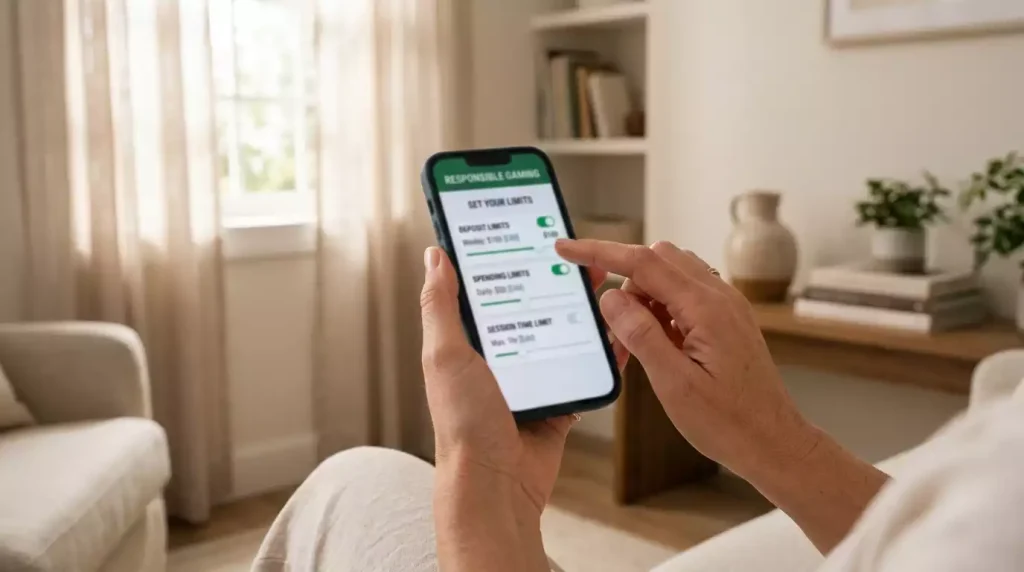
UKGC Licensed Betting Apps: Mobile Security and Limits
Betting safely isn’t about restricting enjoyment; it’s about ensuring the experience remains enjoyable. The UK operates one of the world’s most regulated gambling markets, with protections designed to prevent harm while allowing adults to bet freely. Understanding these protections puts you in control of your betting rather than leaving control to chance or impulse.
The scale of UK gambling demands robust safeguards. Horse racing alone generates substantial betting turnover, though recent trends show concerning patterns. According to analysis of Gambling Commission data, online betting turnover on horse racing has fallen by approximately £3 billion over the past two years. The BHA Racing Report 2026 confirmed that total betting turnover fell 6.8% in 2026, with some of this decline attributed to regulatory changes including enhanced customer protection measures. The industry is adapting to a new reality where protection and commercial viability must coexist.
Richard Wayman, Director of Racing at the British Horseracing Authority, addressed the impact directly in the BHA Racing Report 2026: “I’ve no doubt that these [declines] are headed by the impact of affordability checks and the extent to which they have resulted in people either stopping betting or placing their bets with unlicensed operators where such checks don’t take place.” His comment highlights the tension between protection and market dynamics, a tension that shapes the current regulatory environment.
This guide explains the safety framework surrounding UK mobile betting: licensing requirements, affordability checks, deposit limits, self-exclusion tools, and resources for those who need help. Safe betting is smart betting. The tools exist; using them effectively is your responsibility and your protection.
Understanding UKGC Licensing
The UK Gambling Commission licenses and regulates all legal gambling operators serving British customers. A UKGC licence isn’t optional; it’s legally required for any company offering gambling services to UK residents. Operating without one is a criminal offence, and betting with unlicensed operators leaves you without regulatory protection.
The Commission’s latest industry statistics show the regulatory landscape’s scale: over 2,100 gambling operators hold active licences, with 3,086 licensed activities in total. The number of betting shops has declined to 5,825 as of March 2026, a reduction of 106 premises (1.8%) from the previous year, reflecting the ongoing shift toward online gambling. The Horserace Betting Levy Board collected nearly £109 million in 2026-25, the highest levy yield since the 2017 reforms, despite continued decline in betting turnover.
Verifying an operator’s licence takes seconds. Visit the Gambling Commission’s public register at gamblingcommission.gov.uk and search for the company name. The register displays licence status, the activities covered, and any regulatory actions taken against the operator. Every legitimate betting app displays its licence number in the footer or terms and conditions, typically formatted as a six-digit number followed by letters indicating licence type.
Licensed operators must meet extensive requirements. Customer funds must be held separately from operating funds, protecting your balance even if the company fails financially. Responsible gambling tools must be available and accessible. Marketing must not target vulnerable people or misrepresent odds and outcomes. Dispute resolution must follow established procedures with independent arbitration available. These requirements exist because the regulator enforces them, not because operators volunteer.
The consequences for regulatory breaches are substantial. The Commission regularly issues fines running into millions of pounds for failures in social responsibility, anti-money-laundering, or fair advertising. These enforcement actions, publicly announced, demonstrate the regulator’s willingness to punish non-compliance. An operator facing repeated fines or serious breaches risks licence revocation, effectively ending their UK operations.
Unlicensed operators, sometimes operating from offshore jurisdictions, offer no such protections. They may refuse withdrawals, manipulate odds, sell your data, or simply disappear with your funds. The appeal of better odds or fewer restrictions comes with risks that outweigh any marginal advantage. Sticking with UKGC-licensed operators is non-negotiable for anyone serious about safe betting.
The statutory gambling levy, introduced in 2026, represents the latest regulatory development. This mandatory contribution from operators funds research, education, and treatment related to gambling harm. Parliamentary analysis indicates the levy collected nearly £120 million in its first year, providing sustainable funding for harm reduction initiatives that previously relied on voluntary contributions. Grainne Hurst, Chief Executive of the Betting and Gaming Council, noted in her response to the levy figures: “This demonstrates the growing, long-term investment regulated betting provides British horse racing. But it is concerning to see once more despite record levy contributions, racing continues to struggle, both as a sport and as a betting product.”
Affordability Checks Explained
Affordability checks aim to prevent customers from betting more than they can afford, intervening before financial harm occurs. These checks have become central to UK gambling regulation, though their implementation and impact remain subjects of debate within the industry.
The mechanics work through tiered thresholds. When a customer’s gambling activity reaches certain levels, operators must conduct checks to assess whether that spending is sustainable. The specific thresholds have evolved, but current guidance targets customers losing or depositing above specified amounts within set timeframes. The lowest thresholds trigger lighter-touch assessments; higher thresholds require more detailed financial verification.
Most checks pass without customer friction. According to industry reporting on Gambling Commission pilot data, approximately 95% of the 530,000 financial checks conducted during pilot programmes proceeded through “frictionless assessments.” These checks use publicly available data and credit reference information to verify affordability without requiring customers to submit documentation. Only a minority of cases require the customer to provide payslips, bank statements, or other evidence.
Enhanced checks affect a smaller subset of customers. Industry analysis estimates that 4-6% of horse racing accounts would trigger enhanced financial risk checks under current thresholds. These enhanced checks may require documentation submission and can result in stake limits, cooling-off periods, or account restrictions if affordability cannot be demonstrated.
The concentration of betting activity makes these checks particularly impactful for racing. The same analysis notes that approximately 86% of gross gaming yield from horse racing comes from just 5% of accounts. These high-value customers are precisely those most likely to trigger affordability thresholds, creating disproportionate effects on racing compared to sports with more evenly distributed betting patterns. The BHA’s Q3 2026 Racing Report showed total betting turnover was 4.2% lower than the same period in 2026 and 12.8% lower than 2023, demonstrating the sustained impact on the sport’s commercial foundation.
Customer experience during checks varies by operator. The best implementations conduct background checks invisibly, only contacting customers when human review is necessary. Others request documentation proactively, creating friction for customers who resent intrusion into their finances. If you’re asked to verify affordability, the operator is following regulatory requirements, not targeting you personally. Providing requested documentation promptly typically resolves the situation.
The debate around affordability checks reflects genuine tension between protection and liberty. Preventing people from betting beyond their means protects individuals and families from financial harm. Requiring income verification feels intrusive to customers who consider their betting within affordable limits. The regulatory position prioritises preventing harm even at the cost of some customer inconvenience, a trade-off that not everyone accepts as reasonable.
Setting Deposit Limits
Deposit limits cap how much money you can add to your betting account within a specified period. Unlike affordability checks imposed by operators, deposit limits are self-imposed boundaries that you control. Setting them is one of the most effective protective measures available.
Every UKGC-licensed operator must offer deposit limits, accessible through account settings or responsible gambling menus. You can typically choose daily, weekly, and monthly limits, with all three active simultaneously. A punter might set a £20 daily limit, a £100 weekly limit, and a £300 monthly limit, ensuring multiple checkpoints against overspending.
The power of deposit limits lies in their asymmetry. Reducing a limit takes effect immediately; no waiting period, no approval required. Increasing a limit requires a cooling-off period, typically 24 to 72 hours depending on the operator. This asymmetry means you can protect yourself instantly when you recognise a problem, but you cannot impulsively override protection during a bad session.
Setting limits before you start betting, rather than after problems emerge, establishes healthy patterns. A limit that reflects your genuine disposable income prevents the gradual escalation that catches many punters. You’ll never feel deprived because the limit matches what you planned to spend anyway. The protection kicks in only when emotions push toward excess.
Multiple accounts don’t circumvent effective limit-setting if you apply the same discipline everywhere. Some punters set identical limits across all their betting apps, ensuring total exposure stays within their overall budget. Others concentrate their betting on one platform where limits are easier to track. Either approach works if consistently applied.
Reviewing limits periodically ensures they remain appropriate. Life circumstances change: income increases, expenses grow, financial pressures emerge. A limit that made sense last year might need adjustment. Lowering limits during tight months and raising them during comfortable periods is responsible management, not failure. The tool adapts to your situation.
Session limits and loss limits complement deposit limits at some operators. Session limits cap how long you can bet continuously before the app forces a break. Loss limits cap how much you can lose before betting pauses. These additional tools provide different protections than deposit limits alone, and using multiple tools creates layered defence against problematic patterns.
Self-Exclusion Options
Self-exclusion goes beyond limits, temporarily or permanently blocking your access to gambling. This tool exists for situations where limiting isn’t enough, where the only safe approach is removing access entirely. Understanding your options before you need them means you can act decisively if circumstances require.
Individual operator exclusion blocks your account with a single bookmaker. Every licensed operator offers this option, typically with minimum periods of six months and options extending to five years or indefinitely. During exclusion, you cannot access your account, place bets, or receive marketing from that operator. The exclusion applies to all platforms operated by that company, so excluding yourself from Coral also excludes you from Ladbrokes (both Entain brands).
Requesting individual exclusion usually involves contacting customer support or navigating to responsible gambling settings. Some operators make the process straightforward with clear buttons and minimal friction. Others bury the option in support menus, requiring conversation with agents. Either way, the request must be honoured; operators cannot refuse legitimate self-exclusion requests.
The cooling-off period before reactivation protects against impulsive reversal. You cannot simply change your mind and request immediate reinstatement. The minimum exclusion period must elapse, and reactivation typically requires a waiting period after request, during which you might reconsider. This friction is intentional, ensuring that ending exclusion represents a considered decision rather than a moment of weakness.
During exclusion, operators must take reasonable steps to prevent you accessing your account. This includes blocking login attempts, refusing deposits from recognised payment methods, and removing you from marketing lists. Perfect enforcement is impossible, but operators failing to make reasonable efforts face regulatory consequences.
Temporary breaks offer a lighter alternative to full exclusion. Many operators provide “take a break” features allowing pauses of 24 hours, one week, one month, or similar periods. These breaks block access without the formality of full exclusion, useful when you recognise the need for distance but don’t require long-term removal.
The limitations of individual exclusion matter. Excluding yourself from bet365 doesn’t affect your accounts with Paddy Power, William Hill, or any other operator. If your problem is gambling generally rather than one platform specifically, individual exclusion addresses only part of the issue. For comprehensive protection, GAMSTOP provides a different solution.
GAMSTOP: National Self-Exclusion
GAMSTOP provides what individual operator exclusion cannot: a single registration that blocks your access to all UKGC-licensed online gambling sites simultaneously. One form, one decision, comprehensive protection across the entire regulated UK online gambling market.
Registration takes minutes at gamstop.co.uk. You provide personal details matching your gambling accounts, choose an exclusion period of six months, one year, or five years, and confirm your decision. Within 24 hours, all participating operators receive notification and must block your access. The coverage is comprehensive: every UKGC-licensed online operator must participate in GAMSTOP as a condition of their licence.
The exclusion applies to online gambling only. Betting shops, casinos, bingo halls, and other physical gambling venues are not covered. National Lottery products, including online purchases, are also excluded from GAMSTOP’s scope. If your problem extends to these areas, additional steps are necessary beyond GAMSTOP registration.
During your exclusion period, operators must refuse account creation, block login attempts, prevent deposits, and cease marketing contact. You cannot place bets with any participating operator regardless of how you attempt to access their services. The block applies whether you use apps, websites, or telephone betting services.
Circumventing GAMSTOP is technically possible but defeats its purpose. Unlicensed offshore operators don’t participate, meaning determined individuals can still gamble by seeking out unregulated sites. These sites offer none of the protections that make UK gambling relatively safe: no licence requirements, no fund segregation, no dispute resolution, no accountability. Using them while on GAMSTOP trades one problem for potentially worse ones.
Ending GAMSTOP exclusion requires waiting until your chosen period expires. You cannot shorten a five-year exclusion to one year; the commitment is binding. After expiry, you must actively request removal by contacting GAMSTOP, at which point a further 24-hour cooling-off period applies before access is restored. The process ensures that returning to gambling represents a deliberate, considered choice.
GAMSTOP works best as part of a broader response to problem gambling rather than a standalone solution. The block removes access but doesn’t address underlying issues driving problematic behaviour. Combining GAMSTOP registration with support services, counselling, or treatment programmes provides more comprehensive help than access blocking alone.
Recognising Problem Gambling
Problem gambling develops gradually, often invisibly to the person experiencing it. Recognising warning signs early allows intervention before consequences become severe. Honest self-assessment requires understanding what problematic patterns actually look like.
Chasing losses is a hallmark behaviour. After losing a bet, the urge to place another immediately, attempting to recover the loss, indicates emotional rather than rational betting. Occasional frustration after losses is normal; consistent patterns of doubling down or increasing stakes to recover losses suggests a problem developing.
Betting beyond your means manifests in various ways. Using money allocated for bills, rent, or essentials. Borrowing from friends or family to fund gambling. Taking credit to finance betting activity. Selling possessions to generate gambling funds. Any of these behaviours indicates that gambling has exceeded entertainment and become financially destructive.
Preoccupation with gambling affects daily life. Thinking constantly about past bets, planning future bets, or fantasising about wins while at work, with family, or during other activities. Difficulty concentrating on responsibilities because gambling dominates mental space. Irritability when unable to gamble or when gambling activities are interrupted.
Concealing gambling from others signals awareness that behaviour has become problematic. Lying about time spent gambling, money lost, or the extent of involvement. Hiding betting apps or browser history. Creating secret accounts or payment methods. The need for secrecy indicates internal recognition that current behaviour wouldn’t withstand scrutiny.
Escalation patterns show tolerance developing. Needing larger bets to achieve the same excitement. Finding previously satisfying stake levels boring. Progressing from occasional bets to daily activity to constant engagement. Like substance tolerance, gambling tolerance indicates deepening involvement that rarely reverses naturally.
The impact on young people deserves particular attention. Research from the National Council on Problem Gambling indicates that 1.5% of children aged 11-17 in the UK experience problem gambling, with another 1.9% classified as at-risk. Early exposure and normalisation of gambling through family environments contribute to these patterns, making awareness particularly important for households where betting is common.
Family members often notice problems before the gambler acknowledges them. Changes in mood, unexplained financial difficulties, secrecy about time and money, and relationship strain all signal potential issues. GambleAware research found that 29% of young people in 2026 reported seeing family members they live with placing bets, up from 26% in 2026. This visibility means gambling behaviour models patterns that children may replicate, making responsible gambling by adults a matter of family welfare.
Self-assessment tools help objectify subjective feelings. The Problem Gambling Severity Index asks nine questions about gambling behaviour, producing scores that categorise respondents as non-problem, low-risk, moderate-risk, or problem gamblers. GambleAware and other support organisations offer free online assessments. Taking these honestly, without minimising or justifying behaviours, provides useful perspective on where you stand.
Getting Help
Help exists for anyone struggling with gambling, regardless of how severe the problem has become. Multiple organisations offer free, confidential support through various channels. Reaching out is the hardest step; everything after becomes easier.
The National Gambling Helpline provides immediate telephone support at 0808 8020 133, available 24 hours a day, seven days a week. Calls are free from UK landlines and mobiles, and the service is confidential. Advisors can discuss your situation, suggest coping strategies, and direct you toward appropriate ongoing support. For those uncomfortable with phone calls, live chat is available through the GambleAware website.
GambleAware (begambleaware.org) serves as the primary gateway to gambling support services in Great Britain. The organisation provides information, self-assessment tools, and directories of treatment services. GambleAware funds the National Gambling Treatment Service, ensuring that help is available free of charge to anyone who needs it, regardless of financial circumstances.
GamCare (gamcare.org.uk) offers counselling, support groups, and practical help for anyone affected by gambling. This includes not just gamblers themselves but family members and friends experiencing secondary harm. Online forums connect people with shared experiences, reducing isolation and providing peer support alongside professional services.
The NHS provides gambling disorder treatment through its network of clinics and services. The National Problem Gambling Clinic in London offers specialised outpatient treatment, with similar services expanding to other regions. Referrals come through GPs, GambleAware, or self-referral depending on the service. Treatment is free as part of NHS provision.
Gordon Moody Association specialises in residential treatment for severe gambling addiction. Their programmes remove individuals from gambling environments entirely, providing intensive therapy over extended periods. This level of intervention suits those for whom outpatient support has proven insufficient, though it requires significant commitment of time away from normal life.
Financial guidance complements gambling-specific support. National Debtline (0808 808 4000) and StepChange (stepchange.org) help people manage debt accumulated through gambling. Citizens Advice provides free guidance on legal and financial matters. Addressing financial consequences alongside gambling behaviour prevents debt problems from driving continued gambling in desperate attempts to recover losses.
For family members, Gam-Anon provides support groups specifically for those affected by someone else’s gambling. Recognising that problem gambling harms families and relationships, these services help affected others understand the situation, set appropriate boundaries, and care for their own wellbeing while supporting recovery.
Asking for help demonstrates strength, not weakness. Problem gambling is a recognised disorder with effective treatments. People recover and rebuild lives every day. Whatever your situation, support exists, and reaching out begins the process of regaining control.
