
Horse Racing Bet Types: Mobile Odds and Betting Markets
 Available in US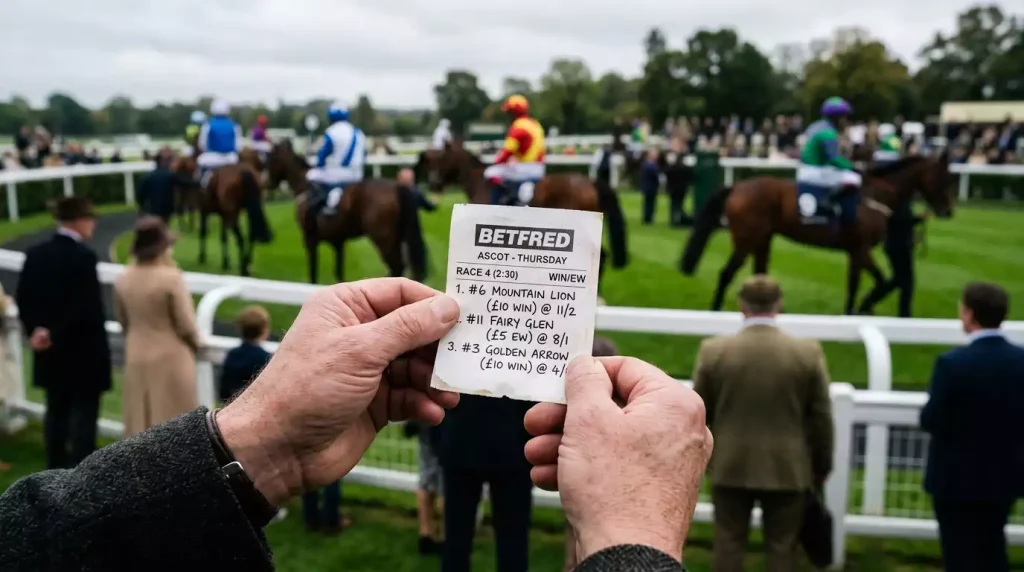
Mobile Racing Bet Types: Accumulators to Each-Way Markets
Horse racing offers more betting variety than any other sport. A football match gives you three outcomes to choose from. A horse race with twelve runners offers win and place bets on each, forecasts predicting the first two home, tricasts predicting the first three, accumulators linking multiple races, Tote pools combining stakes from thousands of punters, and exchange markets where you can back or lay any runner. Understanding this variety transforms how you approach the sport.
The UK horse racing market generates £766.7 million in remote betting gross gaming yield annually, second only to football. Within the broader context, real event online betting GGY reached £2.3 billion in 2026, growing 15% year-on-year according to industry analysis. That money flows through dozens of different bet types, each with its own mechanics, risk profile, and strategic considerations. Punters who understand only win betting are using a fraction of the available toolkit.
This guide works through every major bet type available on mobile racing apps, from the straightforward to the complex. Each section explains how the bet works, when it offers value, and what pitfalls to avoid. Master every bet type before you stake. The knowledge pays dividends across every race you bet on.
The progression here moves from simple to sophisticated. Win bets establish the fundamentals. Each-way betting introduces place terms and fractional calculations. Accumulators show how multiple selections combine. Forecasts and tricasts add positional prediction. Ante-post betting extends your timeframe. Tote pools introduce pari-mutuel mechanics. Exchange betting flips the model entirely, letting you play bookmaker. By the end, you’ll understand every option on your betting app’s race card.
Win Bets: The Foundation
A win bet is the simplest wager in racing: pick a horse, stake your money, collect if it finishes first. The payout multiplies your stake by the odds. Back a horse at 5/1 with £10, and you receive £60 if it wins, comprising your £10 stake plus £50 profit. If it finishes second, third, or anywhere else, you lose your stake entirely.
Fractional odds dominate UK racing. The format shows profit relative to stake: 5/1 means five pounds profit for every one pound staked. Decimal odds, more common in Europe and on exchanges, show total return including stake: 5/1 fractional equals 6.0 decimal. Mobile apps typically let you toggle between formats, and understanding both prevents confusion when comparing prices across platforms.
Win betting suits situations where you have genuine conviction about a horse’s chances. The maths is brutal on borderline selections. A 25% chance of winning translates to fair odds of 3/1. If you’re backing horses at 3/1 that actually win 20% of the time, you’re losing money steadily regardless of individual successes. Win betting rewards confident assessment and punishes uncertainty.
The simplicity of win bets makes them the building block for everything else. Each-way adds a place component. Accumulators link multiple win selections. Forecasts require your win selection plus a second-place prediction. Without solid understanding of win betting fundamentals, the complexity of other bet types becomes overwhelming. Start here, and the rest follows.
One tactical consideration: win betting on short-priced favourites ties up capital for small returns. A £100 bet on an even-money favourite returns £200 when successful, but losing twice erases the profit from a single win. Some punters avoid odds-on selections entirely in win-only betting, preferring each-way or place-only markets where the return structure better matches the risk. Others back short prices confidently when their assessment suggests genuine value exists despite the compressed odds.
Each-Way Betting Deep Dive
Each-way betting splits your stake into two parts: half on the horse to win, half on the horse to place. If your selection wins, both parts pay out. If it places but doesn’t win, only the place portion returns. If it finishes outside the places, you lose both stakes. This structure provides insurance against narrow defeats while maintaining exposure to full win returns.
Place terms determine how many positions count as placed and at what fraction of the win odds. Standard terms vary by race type and field size. Non-handicaps with five to seven runners typically pay two places at one-quarter odds. Handicaps with eight to fifteen runners pay three places at one-fifth odds. Large-field handicaps with sixteen or more runners pay four places at one-quarter odds. These terms appear on every race card in your betting app, and checking them before betting is essential.
The calculation for each-way returns trips up many punters. Consider a £10 each-way bet at 10/1 on a handicap paying three places at one-fifth odds. Your total stake is £20: £10 win, £10 place. If the horse wins, you receive £110 from the win part (£10 stake plus £100 profit) and £30 from the place part (£10 stake plus £20 at one-fifth of 10/1, which is 2/1). Total return: £140 for a £20 stake. If the horse places but doesn’t win, you receive only the £30 place return, losing the £10 win stake for a net position of plus £10.
Each-way betting shines in competitive handicaps where multiple horses have legitimate chances. A horse at 14/1 in a twenty-runner handicap might represent poor win value but excellent each-way value if four places are paid. The place portion at 14/4 (3.5/1) offers a much easier target than predicting the outright winner. Identifying horses likely to run into a place without necessarily winning is a distinct skill from finding winners.
Small-field races present the opposite scenario. In a five-runner Group 1 with only two places paid at one-quarter odds, each-way betting on anything other than outsiders rarely offers value. The favourite at 2/1 pays just 1/2 for a place, and you need it to run second or first to collect anything. Win-only or place-only betting often makes more sense when fields are small and place terms tight.
Extra places promotions from bookmakers enhance each-way value on selected races. When a bookmaker pays five places instead of four on a big handicap, the each-way edge shifts. Horses finishing fifth who would normally lose become placed finishers collecting returns. Scanning multiple apps for the best extra places offers before major handicaps is time well spent.
Each-way doubles and accumulators compound complexity further. An each-way double places four bets: win double, place double, and two permutations where one leg wins and the other places. The stake multiplies accordingly. A £5 each-way double costs £20. The potential returns can be substantial, but the number of possible outcomes becomes difficult to track mentally. Many experienced punters avoid each-way multiples, preferring the clarity of win-only accumulators or single each-way bets.
Accumulators and Multiples
Accumulators link multiple selections into a single bet where all legs must win for the bet to pay out. The appeal is obvious: small stakes can produce large returns when several winners combine. The reality involves brutal mathematics that favour the bookmaker while creating occasional spectacular paydays for punters.
The mechanics start with a double: two selections where the returns from the first roll onto the second. A £10 double on horses at 3/1 and 4/1 returns £200 if both win. A treble adds a third selection, a four-fold adds a fourth, and so on. Each additional leg multiplies potential returns while reducing probability of success. A five-fold at average odds of 4/1 offers theoretical returns of 3,125/1, but the chance of landing all five winners might be less than one in five thousand.
Online betting has made accumulators immensely popular. Industry analysis from Houlihan Lokey shows accumulator betting driving significant portions of online GGY growth, particularly among younger punters attracted by the prospect of life-changing returns from modest stakes. The social media celebration of winning accas reinforces their appeal while obscuring the far more common losing outcomes.
The mathematical edge bookmakers hold on each leg compounds across the accumulator. If each individual bet carries a 5% margin against you, a five-fold compounds that edge to roughly 23%. The bigger the accumulator, the larger the effective margin. This explains why bookmakers promote accas enthusiastically: they’re highly profitable in aggregate regardless of individual big winners.
Acca insurance and bonus offers attempt to mitigate this edge. Many operators refund stakes as free bets if one leg lets down a five-fold or larger accumulator. Others add percentage bonuses to winning accas, paying 5% extra on four-folds and increasing bonuses for larger multiples. These promotions reduce the effective margin but rarely eliminate it entirely. Reading terms carefully matters: bonus percentages often exclude certain markets or require minimum odds on each leg.
Strategic acca betting focuses on value rather than volume. Selecting four horses at genuine value prices creates a worthwhile accumulator. Padding out an acca with short-priced selections to reach bonus thresholds typically destroys value by including legs where the bookmaker’s margin is compressed but still present. Some professional punters use accumulators sparingly, combining two or three strong selections rather than building sprawling multiples. Others avoid them entirely, preferring single bets where edge is clearer to calculate.
Full cover bets offer middle ground between singles and accumulators. A Trixie covers three selections with four bets: three doubles and a treble. A Patent adds three singles for seven total bets. A Yankee covers four selections with eleven bets. These structures ensure returns when two or more selections win, sacrificing some upside for reduced risk. The stake multiplication makes them expensive, but they solve the acca problem of losing everything when one leg fails.
Forecast and Tricast
Forecast and tricast betting requires predicting exact finishing positions beyond the winner. A straight forecast names the first and second horses in order. A tricast names the first, second, and third in order. The difficulty of exact prediction translates to potentially large payouts when successful.
Straight forecasts pay according to the Computer Straight Forecast (CSF), a formula calculating returns based on starting prices of the placed horses. The CSF replaced arbitrary bookmaker pricing with a standardised calculation, though operators can still offer their own forecast prices that differ from CSF. When comparing options, the CSF appears on results pages after the race, allowing you to verify whether bookmaker odds offered fair value.
Reversed forecasts cover both orders: horse A first and horse B second, plus horse B first and horse A second. The stake doubles because you’re placing two bets. If either combination lands, you collect on that leg; the other loses. Reversed forecasts suit situations where you’re confident two horses will fill the first two places but uncertain which will prevail.
Combination forecasts extend coverage further. A combination forecast on three horses covers all six possible first-and-second permutations. On four horses, you’re covering twelve permutations. Stakes multiply accordingly, and the break-even calculation shifts. You need the payout on your winning combination to cover all the losing permutations. Combination forecasts on large selections become expensive quickly, and the returns often disappoint relative to the outlay.
Tricasts pay according to the Computer Tricast formula, extending CSF logic to three positions. The increased difficulty typically produces larger dividends, but the probability of exactly predicting three places in order is low even in small fields. Straight tricasts reward strong opinions; reversed and combination tricasts spread risk at the cost of multiplied stakes.
The strategic case for forecasts and tricasts rests on fields where a few horses clearly outclass the rest. A race where three obvious contenders face inferior opposition might offer poor win value on any of them individually but strong forecast value on combinations of the principals. If the market says each has a 30% win chance and you believe they’ll fill the places in some order, combination forecasts let you bet that opinion.
Mobile apps handle forecasts and tricasts with varying elegance. Some display dedicated interfaces where you select first, second, and optionally third. Others require navigating to specific market tabs. The best apps show forecast permutations and their costs before you confirm. The worst make finding these markets unnecessarily difficult, burying them beneath more popular bet types.
Ante-Post Betting
Ante-post betting places wagers on races weeks or months before they run. The Grand National, Cheltenham Festival, Derby, and other major events attract ante-post markets from the moment the previous year’s race finishes. Prices at these early stages can offer substantial value, but the risk profile differs fundamentally from day-of-race betting.
The core risk is non-runners. Standard ante-post terms provide no refund if your selection doesn’t participate. A horse backed in November for the Champion Hurdle who suffers a training setback in February loses your stake entirely. The horse doesn’t need to lose the race; it simply needs to not run. This risk explains why ante-post prices exceed day-of-race equivalents: the extra value compensates for non-runner exposure.
Some operators offer non-runner no-bet terms on selected ante-post markets, typically at reduced odds. The insurance against withdrawal comes at a price, and calculating whether the protection justifies the shorter odds requires judgement about specific horses’ injury history and training situations. A robust horse from a reliable stable might not need the protection. A fragile sort with a history of setbacks probably does.
Value in ante-post markets often comes from information asymmetry. The market in October reflects public opinion based on the previous season. A horse returning from a break who works exceptionally well in private might remain available at generous prices until more public information emerges. Punters with access to form whispers, stable information, or simply better analytical frameworks can find value before prices contract.
The timing of ante-post bets matters strategically. Backing horses immediately after major trials often means buying at contracted prices after everyone has seen encouraging performances. Backing before those trials involves more risk but captures value if the market moves your way. Some punters take positions months out, accept the non-runner risk, and bank on trial performances shortening their selections. Others wait for confirmation and accept narrower prices.
Best Odds Guaranteed typically doesn’t apply to ante-post betting. The price you take is the price you keep, regardless of how the market moves subsequently. This cuts both ways: your selection might drift after you back it, giving you better value than those who waited, or it might steam in to half the price, validating your early assessment without improving your position. The absence of BOG is a cost of betting early, balanced against the potential for capturing bigger prices.
Tote and Pool Betting
Pool betting operates on a fundamentally different model from fixed-odds bookmaking. Instead of accepting bets at stated prices, the Tote collects all stakes into a pool and divides winnings among successful bettors after deducting a percentage. The payout isn’t known until after the race, determined by how much money backed the winning selection relative to the total pool. Pool Betting Duty is charged at 15% of net stake receipts, a different tax structure from fixed-odds betting.
The UK Tote, now operated by Betfred after acquisition in 2019, offers several pool products. The Win pool requires picking the winner, with dividends reflecting pool distribution. The Place pool pays on placed horses with terms similar to each-way place portions. The Exacta mirrors the forecast, requiring first and second in order. The Trifecta requires first, second, and third in order. These pools appear on most major betting apps alongside fixed-odds markets.
The Placepot has become one of racing’s most popular bets, requiring selections to place in each of the first six races on a card. Minimum stakes are low, typically £1, and the pool often accumulates into substantial sums. A successful Placepot can return thousands from a modest outlay, though landing six placed horses in sequence is harder than it appears. The Quadpot simplifies the challenge by covering races three through six only.
Jackpot pools require winners, not placed horses, in the first six races. The difficulty of picking six winners creates rollovers when no one succeeds, building pools into life-changing sums. Scoop6, the Saturday equivalent, offers even larger potential paydays with bonus funds for successful punters who then pick a winner in a specified seventh race. These pools attract recreational punters seeking lottery-like returns from racing knowledge.
Mobile access to pool betting has improved significantly. Most major apps now integrate Tote pools alongside fixed odds, allowing you to switch between market types without leaving the race card. The better implementations show estimated dividends based on current pool distribution, helping you assess likely returns before committing stakes. Real-time pool totals let you see whether money is concentrated on favourites or spread across the field.
Strategic pool betting involves reading money flow. Heavily backed favourites suppress pool dividends, making outsiders relatively more valuable. Races where public money concentrates on obvious choices create opportunities for contrarian selections. The challenge is distinguishing unpopular horses that lack support because they genuinely can’t win from those overlooked despite legitimate chances.
Exchange Betting
Exchange betting removes the bookmaker entirely, matching punters who want to back a horse with others willing to lay it. Betfair Exchange pioneered this model, and it remains the dominant platform, though competitors like Smarkets and SBK offer alternatives. The peer-to-peer structure typically produces better odds than traditional bookmakers, at the cost of commission on winning bets.
Backing on an exchange works similarly to traditional betting: you select a horse, choose your stake, and collect if it wins. The difference lies in price formation. Instead of a bookmaker setting odds, other users offer to lay your selection at prices they choose. You can accept available prices or request better odds and wait for someone to match. The best available prices often exceed bookmaker offerings because there’s no institutional margin built in.
Laying is the distinctive exchange feature, letting you play bookmaker by accepting other punters’ bets. When you lay a horse, you’re betting against it winning. If the horse loses, you collect the backer’s stake minus commission. If it wins, you pay the backer their winnings. The liability can be substantial: laying a horse at 10/1 with a £10 stake means paying £100 if it wins. Exchange interfaces display potential liability clearly, but understanding it before placing lay bets is essential.
Commission structures vary between exchanges. Betfair charges a base rate of 5% on net winnings, with discounts for high-volume users. SBK positions itself as a lower-commission alternative, typically charging 2-3%. Smarkets also competes on commission levels. The commission affects effective odds: a 5% commission on exchange odds of 6.0 decimal produces effective odds of 5.75 after the cut. When comparing exchange and bookmaker prices, factoring in commission reveals whether the exchange genuinely offers better value.
Best Odds Guaranteed doesn’t apply on exchanges. The price you take is final, with no protection if the starting price exceeds your accepted odds. This disadvantage is offset by typically better base prices and the ability to trade positions pre-race. Punters who back a horse early and see the price shorten can lay the same horse at lower odds, locking in profit regardless of the race outcome.
Liquidity determines exchange usefulness. Major UK and Irish races attract deep markets where backing or laying significant amounts is straightforward. Lesser meetings, evening fixtures, and overseas racing often suffer from shallow pools where finding matched bets at acceptable prices becomes difficult. The concentration of liquidity on Betfair gives it an advantage over smaller exchanges for anything beyond the most popular races.
Exchange betting suits punters who think probabilistically. The ability to lay horses whose odds you consider too short creates opportunities that traditional bookmakers don’t offer. If you believe a horse’s true chance is 10% but the market prices it at 5/1 implied 16.7%, you can lay it and profit when it loses. This approach requires disciplined assessment and acceptance that any horse can win on its day.
Choosing Your Strategy
The variety of bet types creates choices that should align with your goals, bankroll, and analytical strengths. A punter with deep form knowledge and patience for long losing runs might focus on each-way value in big handicaps. Another who enjoys following racing socially might prefer small-stake accumulators for entertainment. Neither approach is wrong if the expectations match the reality.
Bankroll management determines which bet types suit your situation. Win and each-way singles with level stakes suit conservative approaches where preserving capital matters. Accumulators and forecasts suit punters willing to accept frequent losses for occasional large wins. Exchange trading suits those with larger bankrolls who can handle the liability exposure of laying horses. Matching bet type to financial situation prevents the common mistake of chasing accumulator jackpots with money you can’t afford to lose.
Chris Cook, writing in Gambling TV, observed the challenges facing racing punters: “It feels like the sport is becoming less and less attractive to bookmakers and in the long run that is a real issue… I’m afraid there’s every risk that they’re just going to tighten up on the poor punter and we’ll have even more problems than ever getting a bet on at all.” This reality affects bet type strategy: punters who find stakes restricted on win bets might find exchanges more accommodating, while others discover that Tote pools accept wagers without the scrutiny applied to fixed-odds accounts.
Specialisation often beats diversification. Punters who become expert at Placepots develop skills specific to that format: assessing place probability, identifying reliable horses, managing permed selections across six races. Those skills don’t directly transfer to exchange trading or ante-post value hunting. Focusing on one or two bet types and building expertise typically produces better results than dabbling across the full range.
The common thread across all bet types is value assessment. Whether you’re backing a horse to win at 5/1, placing an each-way bet at 14/1, or laying a favourite on the exchange, the fundamental question remains: do the odds reflect true probability? Develop your ability to answer that question, and the specific bet types become tools selected for particular situations rather than arbitrary choices. Master every bet type, then deploy them deliberately.
